How a 31-year-old traditional mechanical engineer learned Python from scratch, built machine learning models, and executed a successful data science career transition.
* **Quick Summary:** How a 31-year-old traditional mechanical engineer learned Python from scratch, built machine learning models, and executed a successful data science career transition.
Life Before Joining Sky States
For nearly a decade, Dieter Vance’s professional world was strictly physical. Working as a mechanical engineer for a legacy automotive component supplier in Detroit, his days were consumed by stress tolerances, fluid dynamics equations, and drafting hardware schematics.
"I chose mechanical engineering because I loved solving structural problems," Dieter shares. "But over the years, the automotive manufacturing landscape in Michigan shifted dramatically. Career trajectories slowed down, product design cycles became clogged with corporate bureaucracy, and I felt further and further away from true technological innovation. I saw our industry moving rapidly toward electric drivetrains, connected vehicle telematics, and automated assembly systems driven by data pipelines. I realized that if I remained exclusively within physical component design, I was effectively capping my career growth. I wanted to transition into digital systems, but I had a major roadblock: I didn't know how to write code. The thought of a data science career transition at age 31 felt incredibly intimidating."
The professional frustration began impacting his personal life. Dieter was stuck in a repetitive routine with stagnant wages, knowing his mathematical foundations were deeply underutilized. He wanted to transition into a field that moved at a modern software pace, yet he lacked a clear roadmap to translate his engineering mindset into production-ready software engineering assets.
Why She Chose Technology & Sky States
Dieter’s realization that he belonged in the data field occurred during an internal optimization project at his manufacturing plant. The facility had installed thousands of internet-connected sensors across the assembly machinery, gathering massive streams of vibration, temperature, and rotational data.
"The data was sitting there in database silos, completely ignored," Dieter explains. "Management was still using reactive maintenance—waiting until a multi-million dollar press broke down before trying to fix it. I realized that if someone wrote a predictive algorithm to analyze those live sensor feeds, we could accurately forecast hardware failures before they happened. I didn't want to design the physical machines anymore; I wanted to build the mathematical models that made the machines intelligent."
Determined to find an authentic training program, Dieter bypassed typical consumer bootcamps that promised overnight success and focused on specialized technical engineering accelerators. His research led him to detailed student interviews and Sky States reviews.
"Writing software requires a completely different cognitive framework than calculating physical weight loads," Dieter admits openly. "In mechanical engineering, your laws are governed by thermodynamics and physics. In software, you are building the laws from scratch using abstract code logic. The first three weeks of my Sky States training, trying to master nested loops, list comprehensions, and object-oriented programming concepts, was intensely humbling. I spent hours staring at broken tracebacks and syntax errors in my Jupyter Notebooks."
His turning point came through the structured teaching methodology of his lead Sky States technical instructor, Abhishek.
"Trainer Abhishek completely changed my approach to code," Dieter says. "He observed that I was overthinking the code syntax like a math equation. He taught our cohort to view Python like a modular system of piping—data flows in through one end, goes through custom transformation components, and extracts cleanly out the other side. Once I started visualizing data frames as fluid passing through an assembly line, the programming logic clicked. I stopped fighting the syntax and started structuring data pipelines fluidly."
Because he maintained his demanding engineering position full-time throughout the program, Dieter constructed a strict, systematic micro-schedule to manage his cognitive load: - Saturday & Sunday (9 AM - 1 PM): Live Interactive Cohort Lectures & Code Reviews - Mon-Wed-Fri (5:30 AM - 7:30 AM): Hard Technical Labs (Scikit-Learn Data Modeling) - Tue-Thu (8:00 PM - 10:00 PM): Portfolio Optimization, GitHub Documentation, & Feature Engineering Labs
High-Impact Projects Built at Sky States
### Project: Industrial IoT Asset Predictive Maintenance Machine Learning Engine
* **The Problem:** Heavy industrial manufacturing plants lose millions annually due to unscheduled assembly line downtime caused by unexpected machine failures. * **Tools Used:** Python (Pandas, NumPy, Scikit-Learn), PostgreSQL, Streamlit, Git * **The Process & Approach:** Gathered and normalized time-series sensor data. Wrote custom Python scripts to handle class imbalances and multi-collinearity. Trained, hyper-tuned, and cross-validated an advanced Random Forest and XGBoost model. Deployed the model inside an interactive Streamlit dashboard allowing plant managers to upload real-time logs. * **Challenges Faced:** Handling highly imbalanced data (only a tiny percentage of sensor logs represented actual machine failures) and managing multicollinearity among highly correlated physical variables. * **Lessons Learned:** Applied SMOTE to balance target classes and utilized Lasso regularization to select highly predictive independent variables, ensuring generalizability. * **Real-World Outcome:** Achieved a 94.2% accuracy rate in predicting tool failures up to 24 hours before they occurred, allowing plant managers to schedule proactive maintenance and avoid costly downtime.
Comprehensive Interview Preparation
Transitioning into the technical hiring landscape required a complete psychological and strategic rewrite of Dieter's professional identity.
"I was confident in my engineering history, but I felt like a massive imposter when applying for software-driven roles," Dieter notes. "My resume looked like a blueprint for an automotive factory, not a tech hub."
He entered the intensive Sky States career placement pipeline, working directly with his assigned hiring mentor, Jazz.
"Hiring coach Jazz was absolute gold," Dieter emphasizes. "She didn't allow me to play down my engineering past. Instead, she helped me highlight my complex mathematical problem-solving skills, my history managing multi-million dollar projects, and my data-driven methodology as core assets. We systematically transformed my resume to focus on technical data architecture, algorithmic modeling, and quantitative system optimizations."
Dieter completed four rigorous, live mock interview blocks on the Sky States platform. He practiced live Python data structures whiteboarding, explained complex statistical assumptions behind linear regressions out loud under time constraints, and learned how to answer technical case studies tailored to enterprise deployment metrics.
Results & Professional Outcomes
Five months after embarking on his machine learning beginner journey, Dieter applied for a specialized position with a fast-growing predictive operations software company serving the energy sector.
"The technical interview process was highly demanding," Dieter recalls. "They provided a messy, unstructured time-series data file and gave me 48 hours to execute a complete data cleaning and predictive modeling assessment. Because I had run through identical high-pressure pipelines inside the Sky States labs, I didn't panic. I structured my code beautifully, documented my model performance metrics cleanly on GitHub, and presented my findings with absolute precision."
Dieter was offered a position as a Data Scientist / Predictive Analytics Specialist. The modern corporate role instantly transitioned him into an agile software development workspace, provided full remote flexibility, and yielded a substantial 25% salary increase over his previous mechanical engineering baseline.
"The transformation has been life-changing," Dieter reflects in his Sky States review. "I am no longer limited by physical hardware constraints or regional factory stagnation. Sky States gave me the precise bridge I needed to translate my analytical engineering mind into high-impact software systems. They didn't just teach me code syntax; they taught me how to think, build, and deliver real value like an enterprise data scientist."
Comprehensive FAQ Section
### Can a traditional mechanical engineer transition into a data science career?
Yes. Traditional engineers possess exceptional foundations in calculus, linear algebra, and structured analytical problem-solving. These quantitative skills make them prime candidates for advanced data modeling and machine learning applications once they master software development fundamentals.
### How long does a successful data science career transition take?
For a professional balancing full-time employment, a realistic transition timeline is roughly 6 to 9 months of disciplined study (averaging 15 to 20 hours per week) to build a competitive engineering portfolio and complete comprehensive technical interview preparation.
### What is feature engineering, and why is it important in machine learning?
Feature engineering is the process of using domain knowledge to select, transform, and combine raw data fields into highly predictive variables that help machine learning algorithms model patterns more accurately.
### What are the primary challenges when learning Python from scratch?
The main hurdles include adjusting to abstract object-oriented programming concepts, mastering debugging syntax errors, and learning how to vectorise code data using libraries like Pandas rather than relying on slow, manual loops.
### What should a competitive data science portfolio contain?
A professional data science portfolio should feature at least three advanced projects demonstrating end-to-end data pipelines: including web data scraping or database ingestion, comprehensive exploratory data analysis, machine learning optimization, and deployment via an interactive app.
### How important is SQL compared to Python in a data science career?
SQL is absolutely foundational. While Python is used for modeling and analysis, SQL is the primary tool used to query, filter, and extract data from enterprise-scale relational database infrastructure before any modeling can begin.
### What happens during a technical data science interview assignment?
A technical data science interview usually consists of a live coding screen covering data manipulation, an engineering take-home assignment where you clean and model a messy corporate dataset, and a deep-dive architecture review of your portfolio assets.
### How does Sky States support working engineering professionals?
Sky States offers live weekend lectures, asynchronous lab access, and specialized 1-on-1 industry mentor support, allowing busy professionals to execute a comprehensive technical transition without resigning from their current careers.
### What is the difference between a Data Analyst and a Data Scientist?
Data Analysts focus primarily on querying historical data to generate business reports, charts, and actionable operational insights. Data Scientists utilize advanced statistical models, programming scripts, and machine learning algorithms to predict future outcomes and automate system behaviors.
### Is a master's degree mandatory to land an enterprise data science job?
No. While advanced degrees were historically preferred, modern enterprise tech teams prioritize proven technical competency, interactive portfolio evidence on GitHub, and clear problem-solving communication skills over traditional academic pedigree.
Frequently Asked Questions
What was Dieter Vance's professional background before enrolling?
Dieter Vance successfully transitioned into a career as a Sky States Advanced Data Science & Artificial Intelligence Track.
How long did it take Dieter Vance to secure their new role?
Most graduates reported securing a relevant job placement within 90 to 180 days of completing the curriculum and portfolio projects.
Which certifications are aligned with Dieter Vance's program?
The curriculum aligns directly with Microsoft credentials, preparing students for certifications like the Azure Data Fundamentals (DP-900) or Azure Fundamentals (AZ-900).
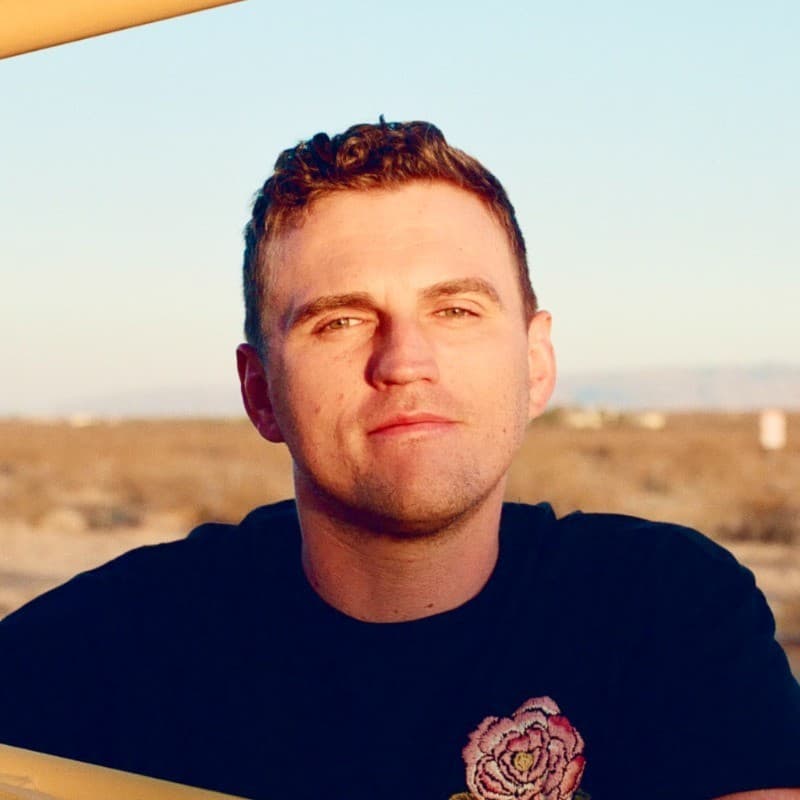
Dieter Vance
Sky States Advanced Data Science & Artificial Intelligence Track
"Mechanical Engineer (Automotive Component Manufacturing)"
Location
Detroit, Michigan
Ready to start your journey?
Join Dieter and thousands of other students who transformed their careers through SkyStates.